
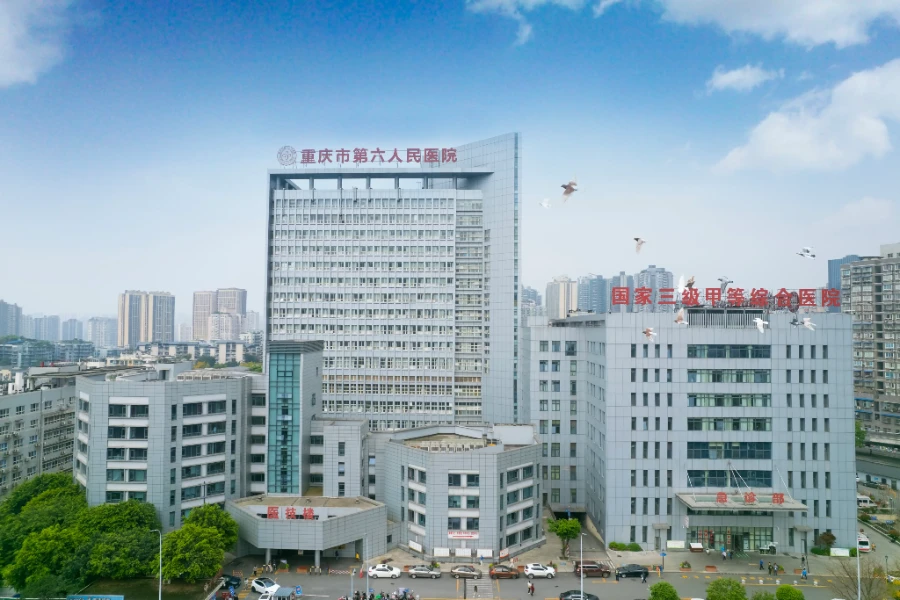
As a national medical center city in Southwest China, Chongqing has gradually become an important destination for users coming to China for medical checkups in recent years. Its medical resources combine regional leading strength, distinctive specialty characteristics, and a mature international service system, while also forming differentiated advantages between cost and experience. If you have travel plans in Southwest China, it is worth paying close attention to.
From the perspective of its core medical system, Chongqing has a group of top-tier Grade-A tertiary general hospitals in China, forming a solid technical foundation for medical checkups.
The First Affiliated Hospital of Chongqing Medical University is one of the strongest comprehensive hospitals in Southwest China. It was founded by experts from the former Shanghai First Medical College who relocated westward. With a complete range of disciplines, it has long undertaken international medical service tasks. Its Jinshan Campus has a dedicated International Medical Department, providing appointment-based diagnosis and treatment, bilingual medical teams, and personalized health management services, enabling a one-stop service model of "general practice management + specialist diagnosis and treatment + multidisciplinary consultation."
The Second Affiliated Hospital of Chongqing Medical University has developed nationwide specialty advantages in liver diseases and digestive system diseases. It has extensive experience in screening and assessment for viral hepatitis, fatty liver, cirrhosis, and related areas, making it suitable for users with concerns about liver and biliary health.
The military hospital system is another major feature of Chongqing’s medical resources.
The First Affiliated Hospital of Army Medical University (Southwest Hospital), one of the first Grade-A tertiary hospitals in China, is the designated healthcare hospital in Chongqing for central government leaders. Its VIP checkup center is equipped with a full range of high-end imaging equipment, including low-dose spiral CT, 3.0T magnetic resonance imaging, and digital mammography. Checkup results can be directly connected with clinical departments throughout the hospital, and if abnormalities are found, follow-up diagnosis and treatment processes can be launched quickly.
The Army Characteristic Medical Center (Daping Hospital) has outstanding strengths in trauma surgery, field surgery, and chronic disease management, making it suitable for middle-aged and elderly groups concerned about cardiovascular, cerebrovascular, and metabolic diseases.
International service capability is an important highlight of Chongqing’s medical checkup resources. At present, several hospitals in Chongqing, including the First Affiliated Hospital of Chongqing Medical University, the Second Affiliated Hospital of Chongqing Medical University, and Chongqing General Hospital, have established international medical zones. Medical teams generally have English communication skills and overseas study experience. Some hospitals provide 24-hour bilingual consultation services and can connect with international commercial insurance settlement. Compared with first-tier cities such as Beijing, Shanghai, and Guangzhou, in-depth checkup packages with the same configuration in Chongqing usually offer better value for money. In addition, hospital campuses are more spacious, crowd density is relatively lower, and waiting times for checkups are shorter.
From the perspective of regional characteristics, Chongqing has particularly rich experience in screening for digestive system and metabolic diseases. Influenced by the local dietary structure, local hospitals have accumulated extensive clinical data in gastroscopy and colonoscopy, Helicobacter pylori screening, fatty liver assessment, and related areas. Procedures such as painless gastroscopy and colonoscopy are highly mature technically and have short appointment cycles.
At the same time, as an international aviation hub in central and western China, Chongqing Jiangbei International Airport connects to major cities around the world. Many core hospitals have campuses near the airport or rail transit stations, making cross-city routes to hospitals clear and convenient.
Chongqing is suitable for users who plan to travel to Southwest China, focus on digestive system and metabolic health, and seek cost-effective in-depth medical checkups. The core characteristics of its medical resources are: solid public Grade-A tertiary hospital strength, distinctive specialty features, a complete international service system, and clear advantages in cost and experience.
Users who choose Chongqing for medical checkups can obtain authoritative reports from Grade-A tertiary hospitals while enjoying a relatively relaxed medical environment and flexible appointment arrangements.